
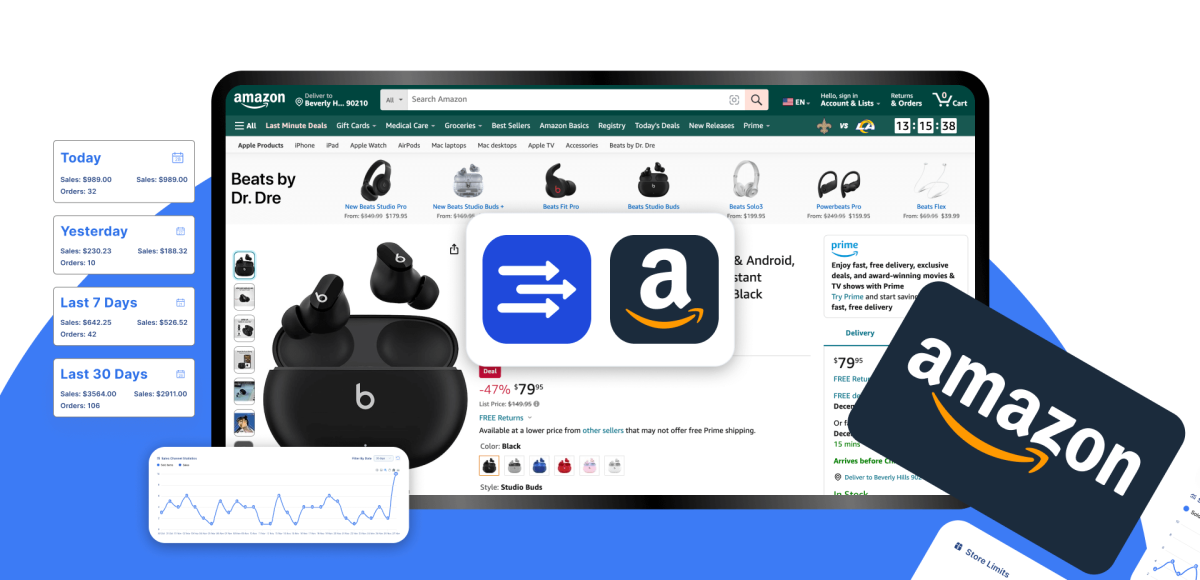
The Complete Guide to Building a Profitable Amazon Business in 2026
Selling on Amazon is no longer just an opportunity — it’s a powerful global business model capable of generating consistent, scalable income. With millions of active buyers browsing daily, Amazon provides unmatched reach. But success on the platform isn’t about luck. It’s about strategy, systems, data, and expert execution.
In this comprehensive guide, we’ll walk you through how to build, optimize, and scale a profitable Amazon business in 2026 — whether you’re a beginner or an experienced seller looking to grow.
Why Sell on Amazon in 2026?
Amazon continues to dominate global eCommerce with billions in annual revenue and a rapidly growing third-party seller ecosystem. Here’s why entrepreneurs are choosing Amazon:
- Access to millions of ready-to-buy customers
- Built-in trust and brand authority
- Advanced fulfillment solutions (FBA)
- Powerful advertising system
- Global expansion opportunities
However, increased competition also means that sellers must operate strategically. Random product selection and poorly optimized listings no longer work. Precision and data-driven decisions are essential.
Step 1: Choosing the Right Business Model
Before launching, you need clarity on which Amazon model suits your goals.
1. Private Label
You create your own branded product and sell under your brand name. This offers the highest scalability and long-term value.
2. Wholesale
You purchase established branded products in bulk and resell them.
3. Online Arbitrage
Buying discounted products online and reselling at higher prices on Amazon.
4. Dropshipping (Limited on Amazon)
Shipping directly from supplier to customer while complying with Amazon’s policies.
For long-term brand growth, private label remains the most sustainable and profitable option.
Step 2: Product Research – The Foundation of Success
Product research determines 70% of your success on Amazon. Choosing the wrong product can lead to high ad costs, inventory loss, and stagnant sales.
A profitable product should:
- Have consistent monthly demand
- Moderate competition
- Strong profit margins (30%+ recommended)
- Lightweight and easy to ship
- Not restricted or gated
Data analysis tools help evaluate:
- Monthly sales volume
- Competitor reviews
- Price trends
- Keyword search volume
Successful sellers focus on solving real problems instead of chasing trends blindly.
Step 3: Setting Up Your Amazon Seller Account
Creating a professional seller account is simple — but setting it up correctly is critical.
You’ll need:
- Business registration documents
- Government-issued ID
- Bank account
- Tax information
- Phone verification
Choosing between FBA (Fulfillment by Amazon) and FBM (Fulfillment by Merchant) is important.
Fulfillment by Amazon (FBA)
Amazon stores, packs, and ships your products. It also handles customer service and returns. This increases Prime eligibility and conversion rates.
Fulfillment by Merchant (FBM)
You handle shipping and logistics yourself.
Most scalable brands choose FBA for automation and higher trust.
Step 4: Listing Optimization – Ranking & Converting
Your product listing is your digital storefront. A poorly optimized listing won’t rank or convert.
An optimized listing includes:
🔹 Keyword-Rich Title
Clear, benefit-driven, and optimized for search volume.
🔹 Compelling Bullet Points
Highlight benefits, not just features. Focus on how the product improves the customer’s life.
🔹 SEO-Optimized Description
Structured content that improves indexing and persuasion.
🔹 High-Quality Images
Professional images with:
- White background main image
- Lifestyle images
- Infographics
- Size charts
- Comparison graphics
🔹 A+ Content (Enhanced Brand Content)
Available through Amazon Brand Registry. This increases conversion rates significantly.
Amazon’s algorithm prioritizes:
- Keyword relevance
- Sales velocity
- Click-through rate
- Conversion rate
Optimization directly impacts all of these.
Step 5: Amazon PPC – Fueling Growth
Amazon PPC (Pay-Per-Click) advertising is essential for visibility. Even the best products need advertising support in the beginning.
Main ad types include:
- Sponsored Products
- Sponsored Brands
- Sponsored Display
A strategic PPC launch includes:
- Automatic campaigns to collect keyword data
- Manual campaigns targeting high-performing keywords
- Continuous bid optimization
- ACOS (Advertising Cost of Sale) monitoring
- Scaling profitable keywords
In 2026, advanced sellers are using data analytics and AI-driven optimization to maximize ROAS (Return on Ad Spend).
Step 6: Inventory & Supply Chain Management
Running out of stock kills momentum. Overstocking increases storage fees.
Successful sellers:
- Forecast demand accurately
- Maintain 60–90 days of inventory
- Monitor restock limits
- Negotiate supplier terms
- Diversify suppliers to reduce risk
Amazon’s warehousing system is powerful but requires precise planning to avoid long-term storage penalties.
Step 7: Reviews & Brand Authority
Reviews drive conversions. Products with strong reviews rank higher and convert better.
Best practices:
- Deliver high product quality
- Use automated review request tools
- Provide excellent customer service
- Address negative feedback quickly
- Insert packaging cards (policy-compliant)
Avoid black-hat tactics. Amazon’s system is strict and violations can result in suspension.
Step 8: Scaling Beyond One Product
Once your first product is profitable:
- Launch complementary products
- Bundle related items
- Expand variations (color, size, pack quantity)
- Enter international marketplaces
- Build external traffic (Google, TikTok, Meta ads)
Brand-building separates temporary sellers from long-term business owners.
Common Mistakes New Sellers Make
Even in 2026, many beginners repeat avoidable mistakes:
❌ Choosing saturated products
❌ Ignoring profit margins
❌ Poor listing images
❌ Running ads without strategy
❌ Not tracking data
❌ Violating Amazon policies
Avoiding these mistakes dramatically increases your success rate.
How Long Does It Take to See Profit?
A properly executed Amazon private label business can take:
- 1–2 months for research and sourcing
- 1–2 months for production and shipping
- 1–3 months for launch and optimization
Most serious sellers aim for profitability within 3–6 months.
Patience and data-driven adjustments are critical.
Is Amazon Still Worth It in 2026?
Absolutely — but only for serious sellers.
Amazon is no longer a “get rich quick” platform. It rewards:
- Strategy
- Branding
- Consistency
- Financial planning
- Marketing knowledge
Those who treat it like a real business continue to generate sustainable six and seven-figure revenues.
Final Thoughts
Building a profitable Amazon business in 2026 requires more than uploading a product and hoping for sales. It demands professional research, optimized listings, structured advertising, inventory planning, and continuous growth strategies.
The opportunity is massive — but execution determines success.
If you’re ready to build, launch, or scale your Amazon store the right way, partnering with experienced professionals can dramatically shorten your learning curve and reduce costly mistakes.
Your Amazon success isn’t about luck.
It’s about strategy, systems, and smart execution.
Leave a Comment